
Hydraulic Concrete Wall Saw: A Decision Guide for Contractors and Property Owners

Introduction
Deciding how to cut through a thick concrete wall is not always straightforward. Some contractors reach for demolition tools out of habit, while others assume any cutting saw will do the job. In reality, a hydraulic concrete wall saw is often the smarter, more controlled choice, but knowing when it genuinely applies to your project can save you time, money, and unnecessary damage.
This guide walks through a practical decision making process, comparing this method against demolition and lighter cutting tools, and outlining exactly what to expect once you commit to booking a specialist team. By the end, you will be able to confidently decide whether this is the right approach for your next project.
Table of Contents
- Hydraulic Wall Sawing Versus Demolition
- Hydraulic Wall Sawing Versus Lighter Cutting Tools
- A Simple Decision Framework for Your Project
- Real World Scenarios Where This Method Fits Best
- The Step by Step Process From Booking to Completion
- Understanding Warranty and Workmanship Guarantees
- Long Term Maintenance Considerations After Cutting
- Environmental and Noise Impact Compared to Other Methods
- What Site Managers Should Prepare Before the Assessment Visit
- Common Mistakes That Lead to Project Delays
- Frequently Asked Questions
- Conclusion
- Call to Action
Hydraulic Wall Sawing Versus Demolition
Traditional demolition breaks concrete apart using force, often leaving jagged, uneven edges and generating significant noise, dust, and debris. A hydraulic concrete wall saw takes an entirely different approach, using a diamond blade guided along a fixed track to produce a clean, straight cut with minimal disruption to the surrounding structure.
For projects where the surrounding area needs to remain intact, such as an occupied office or a building where only a specific section needs removal, this precision matters enormously. Demolition risks cracking beyond the intended area, while controlled hydraulic cutting keeps the impact contained to exactly where it is needed.
Hydraulic Wall Sawing Versus Lighter Cutting Tools
Handheld electric saws and smaller cutting equipment work well for thinner walls or smaller openings, but they struggle once concrete thickness or reinforcement increases. Attempting a large or reinforced cut with underpowered equipment often leads to slow progress, excessive blade wear, and inconsistent results.
A hydraulic system solves this by delivering steady, high torque power regardless of material density, allowing technicians to complete large or reinforced cuts efficiently without the equipment struggling partway through the job.
A Simple Decision Framework for Your Project
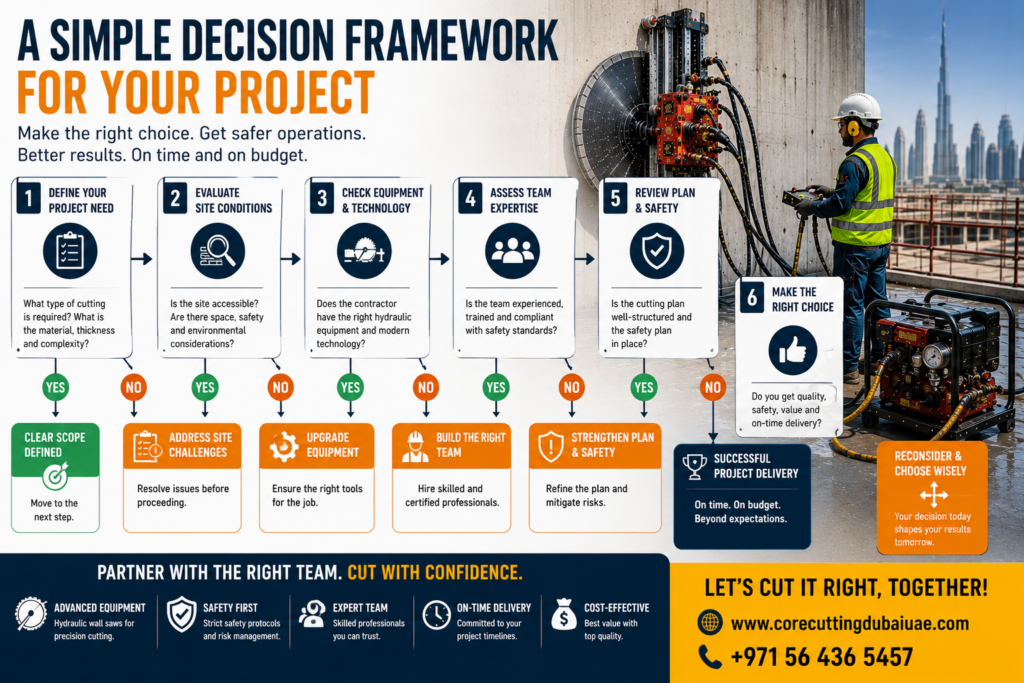
Use this framework to help determine whether hydraulic cutting is the right fit.
- Measure or estimate the wall thickness. Thicker walls generally require more powerful equipment.
- Consider whether the wall is reinforced with steel bars, which significantly increases cutting difficulty for lighter tools.
- Think about the size of the opening needed. Larger openings benefit from the precision and consistency hydraulic equipment provides.
- Factor in the surrounding environment. Occupied spaces benefit from the reduced vibration and controlled dust that come with this method.
- Ask a contractor for an honest assessment during a site visit rather than assuming which equipment is needed.
Following this simple process helps avoid both underestimating a job with lighter tools and overspending on equipment a smaller project does not require.
Real World Scenarios Where This Method Fits Best
Renovating an Occupied Commercial Building
When tenants remain on site during construction, minimizing noise, dust, and vibration becomes a priority, making controlled hydraulic cutting a strong fit.
Expanding an Industrial Facility
Factories often have thick, reinforced walls designed for structural strength, requiring equipment capable of handling dense material without slowing production timelines.
Creating a Large Structural Opening
Projects requiring a full doorway, window, or ventilation section benefit from the straight, accurate lines this method produces compared to less controlled alternatives.
Infrastructure and Public Works Projects
Bridges, tunnels, and similar structures frequently involve extremely thick concrete sections where only powerful, precise equipment can deliver the required result.
The Step by Step Process From Booking to Completion
Initial Inquiry
You describe your project, including wall thickness if known, the size of the opening required, and the location of the work.
Site Visit and Assessment
A technician visits to confirm measurements, check for reinforcement, and review any structural considerations before finalizing a plan.
Scheduling and Quotation
Once the assessment is complete, you receive a written quote along with a proposed timeline for the work.
Cutting Day
The crew arrives with the track system, saw unit, and hydraulic power pack, setting up before beginning the controlled cutting process.
Final Walkthrough
Once the cut is complete, the team reviews the finished opening with you, confirms it meets the agreed specifications, and clears the site of debris.
Understanding Warranty and Workmanship Guarantees

Reputable contractors typically stand behind their cutting work with some form of workmanship guarantee, meaning they will address any issues related to inaccurate cuts or damage caused during the process at no additional cost. Before booking, ask specifically what is covered under their guarantee and for how long it applies after project completion.
This is an important detail that is easy to overlook when comparing quotes based on price alone, since a lower upfront cost from a provider without a clear guarantee could end up costing more if issues arise later.
Long Term Maintenance Considerations After Cutting
Once an opening has been cut, some finishing work may be needed depending on its purpose. Openings for doors or windows often require frame installation and sealing, while ventilation or utility openings may need additional fitting work completed by other trades.
Discussing these next steps with your cutting contractor in advance helps ensure a smooth handoff to whichever team handles the finishing work, avoiding delays between project phases.
Environmental and Noise Impact Compared to Other Methods
Property owners in occupied buildings often worry about how disruptive a cutting project will be. Compared to demolition, hydraulic wall sawing produces significantly less airborne dust thanks to continuous water application, and the noise generated is generally more consistent and manageable than the sudden impact noise associated with breaking equipment.
This makes it a preferable option for projects near residential units, active offices, or public spaces where minimizing disruption is a priority alongside getting the job done correctly.
What Site Managers Should Prepare Before the Assessment Visit
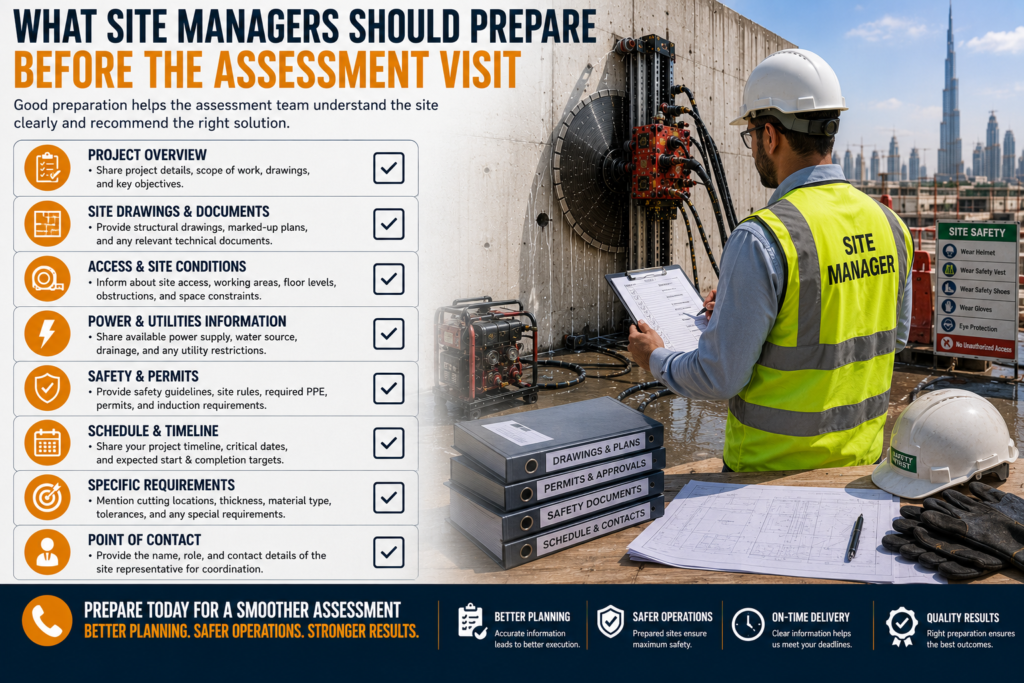
Getting the most accurate assessment and quote starts with having the right information ready before a technician arrives.
• Building or structural plans, if available, showing wall composition and reinforcement details.
• A clear description of the intended use for the opening, whether for a door, window, ventilation, or utility routing.
• Photos of the wall from multiple angles, especially for larger or unusual sections.
• Information about site access, including floor level, parking, and any equipment transport restrictions.
• Details about whether the space will remain occupied during the work.
Sharing these details upfront allows the assessment to move faster and results in a more precise, reliable quote once the technician reviews your project in person.
Common Mistakes That Lead to Project Delays
Even experienced project managers sometimes run into avoidable setbacks when planning a cutting project. Being aware of these common issues can help you sidestep them entirely.
Underestimating Wall Thickness
Guessing at measurements instead of confirming them with a proper assessment often leads to scheduling the wrong equipment, resulting in delays once the crew discovers the actual conditions on site.
Skipping the Reinforcement Check
Assuming a wall contains no steel reinforcement, without verifying, can lead to slower progress and unexpected complications during the cutting process itself.
Booking Without a Written Quote
Verbal estimates rarely capture the full scope of a project, and moving forward without a detailed written quote often leads to disputes over pricing later.
Ignoring Site Access Requirements
Failing to confirm that the equipment and power pack can actually reach the work area can cause significant delays on the scheduled day of cutting.
Addressing these details early in the planning process helps keep your project on schedule and within budget.
Frequently Asked Questions
How do I know if my wall needs hydraulic cutting instead of a standard saw?
If the wall is unusually thick, contains steel reinforcement, or requires a large opening, hydraulic equipment is generally the safer and more efficient choice compared to standard tools.
Is this method more expensive than demolition?
Pricing can vary, but the precision and reduced cleanup required with controlled cutting often make it more cost effective overall, especially when protecting the surrounding structure matters.
How disruptive is this process for occupied buildings?
It is generally far less disruptive than demolition, with continuous water application reducing dust and more consistent noise levels compared to sudden impact based methods.
What happens if the wall turns out to be thicker than initially estimated?
An experienced technician will reassess during the site visit and adjust the equipment or approach accordingly before finalizing the quote.
Do I need a permit for this type of work in Dubai?
Larger structural modifications may require approval from local authorities, and an experienced contractor can help guide you through the necessary process.
How long should I expect the entire process to take from inquiry to completion?
Depending on scheduling availability, most straightforward projects move from initial inquiry to completed cutting within a few days to about a week.
What should I ask about warranty coverage before hiring a contractor?
Ask specifically what workmanship issues are covered, for how long the guarantee applies, and whether it includes damage caused during the cutting process itself.
Can this method be used for both indoor and outdoor projects?
Yes, hydraulic wall sawing is suitable for both settings, with adjustments made for water management and access depending on the specific site conditions.
Conclusion
Choosing between hydraulic cutting, demolition, and lighter tools does not need to be a guessing game. By considering wall thickness, reinforcement, the size of the opening required, and the surrounding environment, you can make an informed decision that protects your budget, your timeline, and your property.
Working with an experienced team that walks you through this decision honestly, rather than defaulting to whichever equipment they happen to have available, is one of the clearest signs of a contractor worth hiring.
Call to Action

Ready to get an honest assessment of whether hydraulic cutting is the right fit for your project. Reach out today for a straightforward site visit and detailed quotation.
Phone and WhatsApp: +971 56 436 5457
Email: sccdubaiuae@gmail.com
Website: corecuttingdubaiuae.com
Free site visit and competitive quote for every hydraulic concrete wall saw cutting project across Dubai and the UAE.