
Electric Concrete Wall Saw Cutting: A Practical Guide for Property Owners

If your renovation or construction project involves cutting a doorway, window, or large opening into a concrete wall, you have probably come across the term Electric concrete wall saw while researching your options. It is one of several methods used to cut through concrete, and for many indoor or occupied building projects, it tends to be the most practical choice available.
This guide breaks down how this equipment works, when it makes sense for your project, and what questions to ask before hiring a team to handle the cutting. Whether you are a homeowner planning a renovation or a contractor coordinating a commercial fit out, this article will help you approach the decision with more confidence.
Getting this choice right matters more than most people expect. The wrong equipment or an inexperienced crew can lead to uneven edges, cracked surfaces nearby, or delays that push your renovation timeline back by days. A little research before booking usually pays for itself many times over.
What Is an Electric Concrete Wall Saw?
An electric wall saw is a track guided cutting machine fitted with a diamond blade, designed to make straight, controlled cuts through concrete and masonry walls. The saw runs on electric power rather than a hydraulic pump or a gasoline engine, which changes how it performs on site in a few important ways.
Because the blade follows a fixed track rather than being guided by hand, the resulting cut is far straighter and more consistent than what a handheld saw can achieve, particularly on thicker walls or longer openings.
How the Cutting Process Works
The technician first secures a guide track to the wall surface using anchors or a vacuum mount, depending on the material and condition of the wall. The saw head then rides along this track while the diamond blade extends further into the concrete with each pass, gradually cutting all the way through the wall thickness.
Throughout the cut, water flows continuously over the blade. This serves two purposes: it keeps the blade cool enough to maintain its cutting edge, and it suppresses the dust that would otherwise be released into the air, which matters a great deal in occupied spaces.
When an Electric Wall Saw Makes the Most Sense
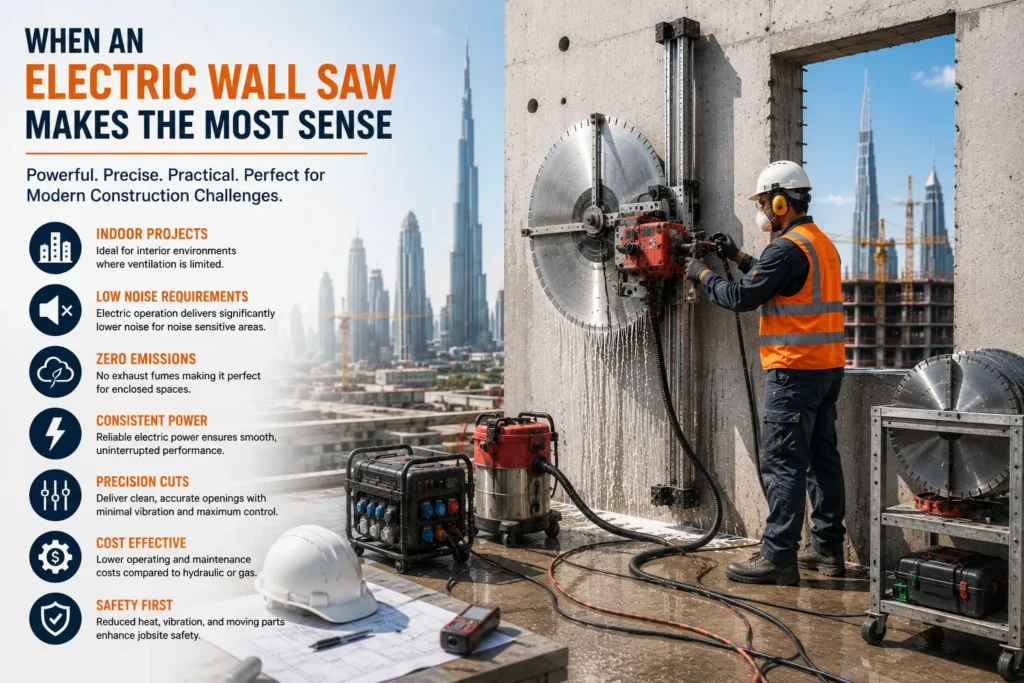
- Indoor projects where dust and airborne particles need to stay under control
- Occupied buildings such as offices, apartments, and hotels where noise complaints are a concern
- Projects requiring long, straight cuts for large openings like garage doors or storefronts
- Renovation work where existing finishes nearby need to be protected from vibration damage
- Sites without space or ventilation for gasoline powered equipment
Electric Versus Hydraulic Wall Saws
| Feature | Electric Wall Saw | Hydraulic Wall Saw |
|---|---|---|
| Power Source | Standard electrical supply | Separate hydraulic power unit |
| Noise Level | Lower, suited to occupied buildings | Louder, better for outdoor or industrial sites |
| Setup | Simpler, fewer components to transport | More equipment to mobilize on site |
| Best For | Standard residential and commercial walls | Very thick or heavily reinforced structural walls |
| Fumes | None | None, but power unit may need ventilation |
Both methods rely on diamond blades and water cooling, but the choice between them usually comes down to wall thickness, site access, and how much noise the location can tolerate.
Typical Applications for Wall Saw Cutting
- Cutting new door openings for renovated homes or offices
- Creating window openings during a building extension
- Forming large openings for retail storefronts or garage entrances
- Cutting access points for staircases or elevator shafts
- Preparing wall sections for planned demolition or removal
- Creating ventilation or duct pathways during HVAC upgrades
Materials and Wall Types This Equipment Can Handle
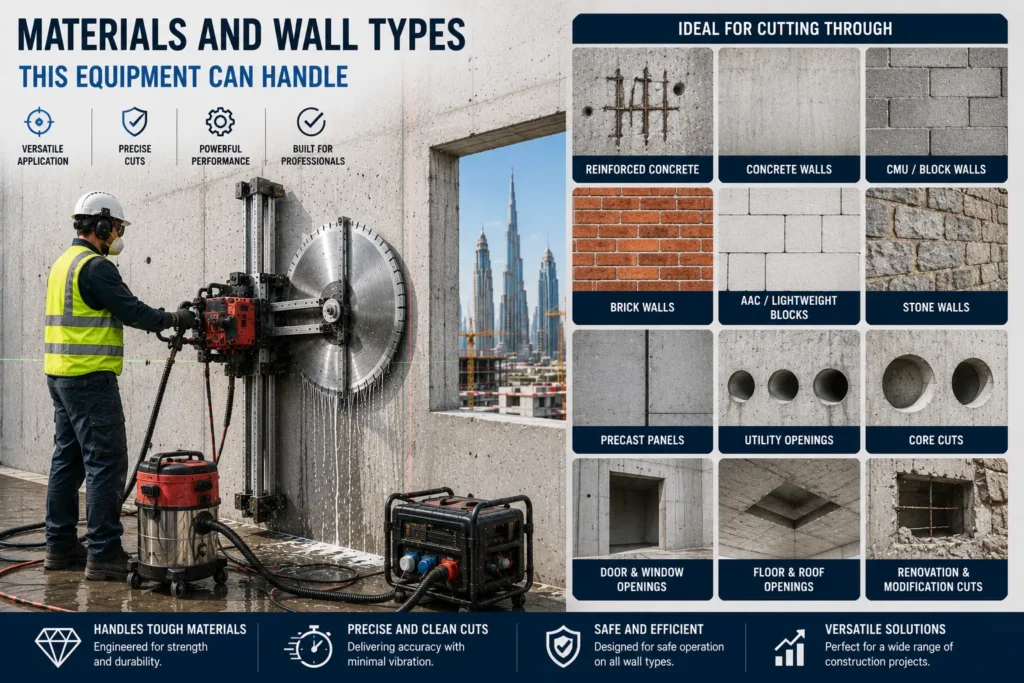
A capable wall saw setup is not limited to plain poured concrete. Most professional teams work across reinforced concrete, concrete block, and various types of masonry, adjusting the blade and cutting speed to match the material in front of them.
Reinforced concrete requires a blade designed to pass through steel bars without excessive wear, while lighter block or masonry walls can often be cut faster with a standard segment blade. Knowing the wall type in advance, even a rough estimate, helps the crew arrive with the correct equipment rather than discovering a mismatch once the job has already started.
Choosing the Right Blade and Track Setup
Blade diameter is selected based on wall thickness, since the blade must be large enough to pass completely through the material within a reasonable number of passes. A wall that is unusually thick may require a larger blade or, in some cases, cutting from both sides to meet in the middle.
Track length and mounting method depend on the size of the opening and the condition of the surrounding surface. Vacuum mounted tracks work well on smooth, even walls, while anchored tracks are often used on rougher surfaces or when extra stability is needed for a longer cut. Getting this setup right before cutting begins is one of the main reasons experienced crews finish faster and produce cleaner results than less experienced ones.
Site Preparation and Access Considerations
Before the crew arrives, a few simple preparations can make the job go more smoothly. Clearing furniture, equipment, or stored materials away from the cutting area gives the team room to set up the track safely. Confirming access to a stable power source in advance also avoids delays, since the saw depends on a consistent electrical supply to maintain cutting speed.
For upper floor locations, it also helps to confirm elevator or stairwell access for transporting equipment, particularly on larger projects that require heavier tracks or multiple blade sizes.
Step by Step Process for a Wall Cutting Project
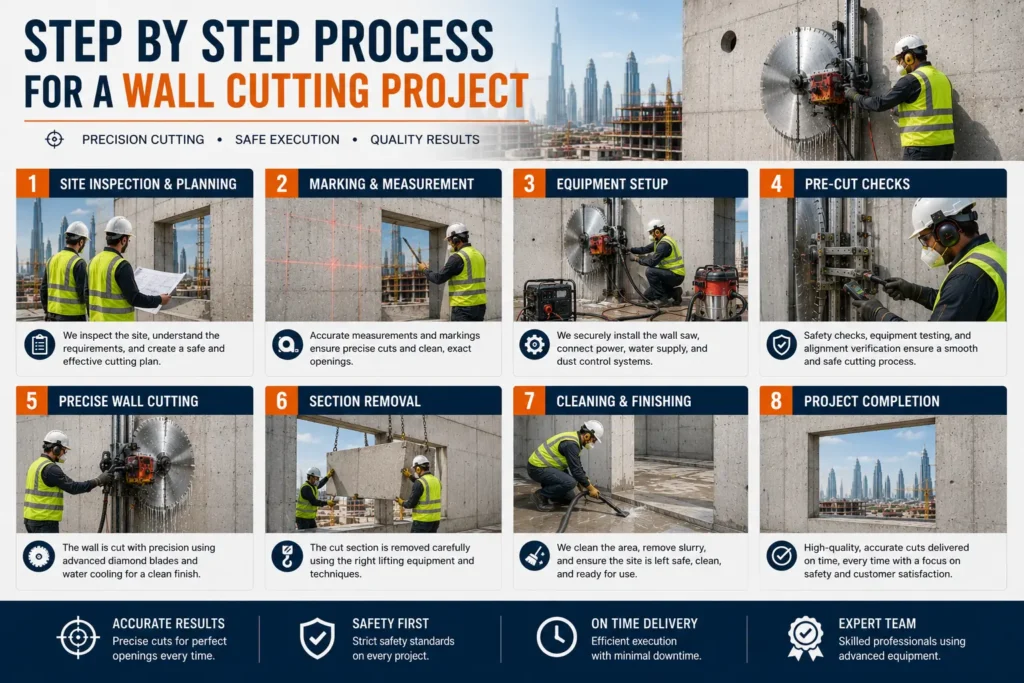
Initial Consultation
You describe the project, including wall material, thickness if known, and the size of the opening required.
Site Visit and Scanning
A technician visits the site to confirm measurements and scan the wall for rebar, cables, or other embedded elements before any cutting begins.
Quotation
You receive a written estimate based on the actual scope, factoring in wall thickness, access, and the number of cuts needed.
Cutting Day
The crew installs the guide track, sets up water cooling, and completes the cut according to the confirmed dimensions.
Removal and Cleanup
The cut section is safely removed, debris is cleared, and the site is cleaned before the crew leaves.
Final Walkthrough
You inspect the finished opening together with the technician to confirm it meets the agreed specifications.
Factors That Affect Wall Saw Cutting Costs
- Thickness and density of the wall material
- Presence of steel reinforcement inside the concrete
- Length and height of the opening required
- Ease of access to the work area, including floor level
- Number of separate cuts needed during the same visit
- Whether the project needs to be scheduled urgently
A dependable contractor should walk you through these factors clearly rather than quoting a flat price without explanation. Requesting a breakdown in writing also gives you something to refer back to if the final invoice looks different from what was originally discussed.
Advantages and Limitations of This Cutting Method
Advantages
- Straight, accurate cuts guided by a fixed track system
- Lower noise output compared to hydraulic or gas powered saws
- No exhaust fumes, making it suitable for enclosed spaces
- Water cooled operation that controls dust throughout the cut
- Clean edges that reduce the need for additional finishing work
Limitations
- May not be the fastest option for extremely thick structural walls
- Requires a stable power connection capable of supporting the equipment
- Track installation adds a short setup step compared to handheld cutting tools
Questions to Ask Your Contractor Before Booking

- Do you scan the wall for rebar and hidden utilities before cutting?
- What blade size and track length will you use for this project?
- Is water cooling and dust control included in the standard service?
- Will debris removal and site cleanup be part of the final price?
- Can you provide a written quote after reviewing the site or photos?
Frequently Asked Questions
What is an electric concrete wall saw used for?
It is used to cut straight, controlled openings through concrete or masonry walls for doors, windows, storefronts, and other structural modifications.
Is this method suitable for occupied buildings?
Yes, the lower noise output and water cooled dust control make it a practical choice for offices, homes, and other occupied spaces during renovation work.
Can it cut through reinforced concrete walls?
Yes, diamond blades can cut through reinforced concrete, though very thick or heavily reinforced walls sometimes require a hydraulic saw instead.
How long does a typical wall cutting project take?
A standard door or window opening can often be completed within a few hours, while larger openings may take longer depending on wall thickness and reinforcement.
Does the process create a lot of dust?
No, continuous water cooling during the cut significantly reduces airborne dust compared to dry cutting methods.
Is scanning necessary before cutting begins?
Yes, scanning identifies rebar, cables, and utilities hidden inside the wall, which helps avoid damage and keeps the job site safe.
What is the difference between wall sawing and core drilling?
Wall sawing produces straight cuts for openings like doors and windows, while core drilling creates round holes typically used for pipes, cables, or anchor bolts.
Can one contractor handle both wall sawing and demolition?
Yes, many full service providers, including Core Cutting Dubai, offer wall sawing alongside demolition, slab sawing, and other related concrete cutting services.
What happens if the wall turns out to be thicker than expected?
If actual thickness differs from initial estimates, the crew may need a larger blade or additional passes, which a transparent contractor will explain and reflect clearly in the final invoice.
Do I need approval from building management before wall cutting?
Many commercial and residential buildings require prior notice or written approval before structural cutting work, so it is worth checking with your building management ahead of time.
Conclusion
Choosing the right method for cutting a concrete wall comes down to understanding your project’s noise tolerance, wall thickness, and site conditions. For most residential and commercial projects, this equipment offers a clean, quiet, and accurate way to create openings without the disruption of older cutting methods. Asking the right questions before booking, from scanning practices to pricing transparency, helps ensure the finished result matches what you actually need.
Taking a little extra time upfront to confirm wall thickness, share accurate dimensions, and clarify what is included in the quote tends to prevent most of the delays and misunderstandings that can otherwise slow a project down. A contractor who walks you through these details before work begins is usually a strong sign that the job itself will go just as smoothly.
Get a Free Quote From Core Cutting Dubai UAE

Core Cutting Dubai UAE provides wall sawing, slab sawing, floor saw cutting, core drilling, AC duct cutting, beam cutting, lift cutting, windows cutting, and demolition work across Dubai. Our team scans every site before cutting and uses water cooled equipment to keep dust and noise under control.
Call or WhatsApp +971 56 436 5457
Email sccdubaiuae@gmail.com to schedule a free site assessment for your project.